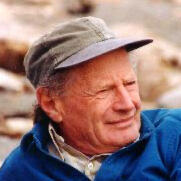
The Work of Michael J. Cohen
Michael J. Cohen is one of the early pioneers of experiential ecopsychology. Beginning in the 1950s, he developed a body of sensory‑based, nature‑rooted practices that helped thousands of people reconnect with the living world in ways that were accessible, regulating, and grounded in direct experience. His program, Project NatureConnect, offered an alternative pathway for individuals who did not find wellbeing or belonging within traditional academic or clinical structures.Clinical neuropsychologist John Scull described Cohen as “one of the pioneers of outdoor environmental education and ecopsychology,” noting that beneath his unconventional language lies “a practical experiential process for gaining deep understanding of our place in nature.” Scull emphasizes that Cohen’s approach “works for many people” and aligns with contemporary science and philosophy. His overview remains one of the clearest articulations of Cohen’s early work and its significance.Cohen’s experiential activities, simple, sensory, and relational, created conditions in which people could feel regulated, connected, and grounded. For many, including those who found traditional higher education dysregulating or inaccessible, his methods opened a path toward wellbeing that would not have been available elsewhere.
In his later years, Cohen’s writing has become increasingly metaphorical, idiosyncratic, and linguistically complex. While his current language reflects a different phase of his life and thinking, the experiential foundation he developed earlier continues to hold value. This archive focuses on the clarity of his foundational contributions, contextualized through Scull’s work, and preserves the practices that helped so many people reconnect with their sensory intelligence and ecological belonging.What follows is a curated selection of Cohen’s most influential works, those that best represent the experiential, sensory‑based approach that shaped the early field of applied ecopsychology.
Selected Works and Resources
Well Mind, Well Earth: 97 Environmentally Sensitive Activities for Stress Management, Spirit and Self-Esteem
Cohen, M. J. (1993). World Peace University. ERIC Document ED364805.
Download PDFThis experiential manual presents 97 nature-based activities designed to reduce stress, support self-esteem, and restore human relationship with the natural world. It reflects early development of Cohen’s sensory-based practices.Reconnecting with Nature: Finding Wellness Through Rebuilding Your Bond with the Earth
Cohen, M. J. (2007). Ecopress.
View on AmazonThis book introduces the Natural Systems Thinking Process and outlines a step-by-step approach to restoring human connection with the Earth through direct sensory experience.Nature Connected Psychology: Creating Moments That Let Earth Teach Cohen, M. J. (2002). Global Journal of Science Frontier Research.
Read PDFThis paper presents an academic articulation of nature-connected psychology, describing how sensory-based engagement with the natural world supports individual and collective well-being.The Web of Life Imperative: Regenerative Ecopsychology Techniques That Help People Think in Balance with Natural Systems
Cohen, M. J. (2003). Trafford Publishing.
AmazonProject NatureConnect – Core Ecopsychology Curriculum
Visit Project NatureConnect
Cohen’s primary teaching platform, offering access to his courses, writings, and training in applied ecopsychology and the Natural Systems Thinking Process.This work introduces regenerative ecopsychology techniques and expands on the Natural Systems Thinking Process as a framework for aligning human thinking with natural systems.These materials reflect different phases of Cohen’s work and are best understood through direct engagement with the practices they describe.
Brief Intro to John Scull’s Overview
For a clear and accessible explanation of Michael J. Cohen’s early ecopsychology work, clinical neuropsychologist John Scull offers the most reliable summary. His paper describes how Cohen’s experiential, sensory‑based practices helped many people reconnect with nature, while also contextualizing Cohen’s unconventional language. Scull’s overview remains the best entry point for understanding the foundations of Cohen’s approach.Read Scull’s paper
The foundational activities and practices Cohen developed continue in the work of practitioners he trained across the field of applied ecopsychology. Gardin Press, founded in 2025, serves as the formal archive for Cohen's public-facing work, a role that has been held by its founding editor since 2024. Gardin Press is also building the broader practitioner archive: the first-person, research-grounded accounts of what sustained nature contact actually does, written by practitioners who came to this work through their own necessity and have practiced it across decades. The knowledge Cohen seeded is alive in those practitioners. Gardin Press is the infrastructure that makes it citable and transferable to the next generation.
gardinpress.com
Michael J. Cohen, Ph.D., Ed.D. 2026